AI chatbots are helpful, but they sometimes give answers that sound right and are completely wrong. They can invent statistics, quotes, laws, product features and even sources. The good news: catching these mistakes is easy once you know what to look for.
Here are six simple ways to fact-check AI answers.
Why AI Gets Things Wrong
AI models predict the most likely next words based on patterns, not by looking up verified facts. That’s why they can produce believable mistakes, often called “hallucinations.” Information can also be out of date, especially for prices, laws and news.
1. Ask for Sources, Then Open Them
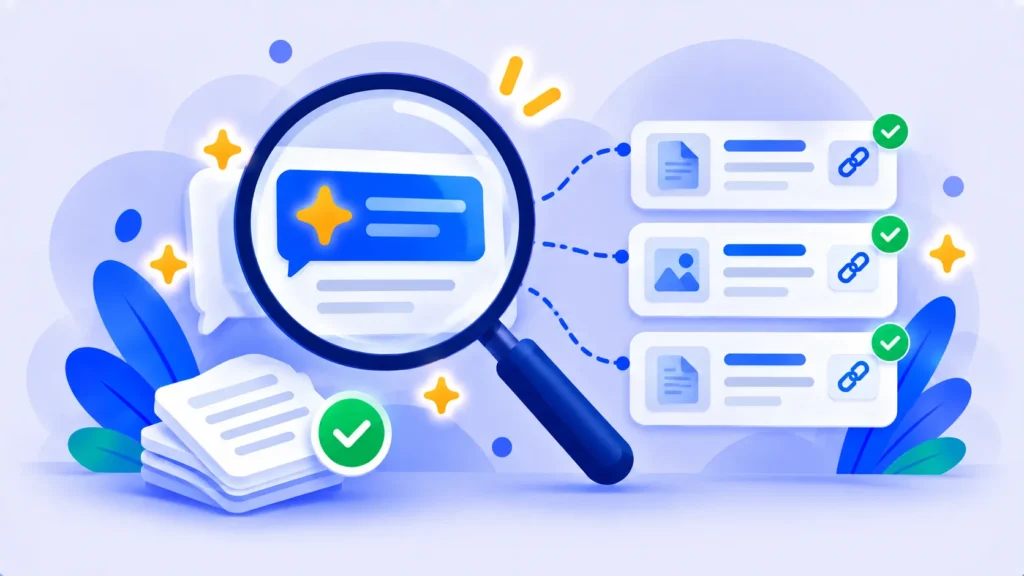
Ask: “Give me sources for this answer.” Then actually click the links. AI sometimes invents sources or links to pages that don’t say what it claims. Tools like Perplexity show sources by default.
2. Check the Important Details
Focus on numbers, dates, names, prices and quotes. These are where mistakes hide. Search for each one quickly on a trusted site.
3. Use Official Sources
For health, money, legal or government information, check the official website: a government agency, your bank, the product maker or a recognized health organization.
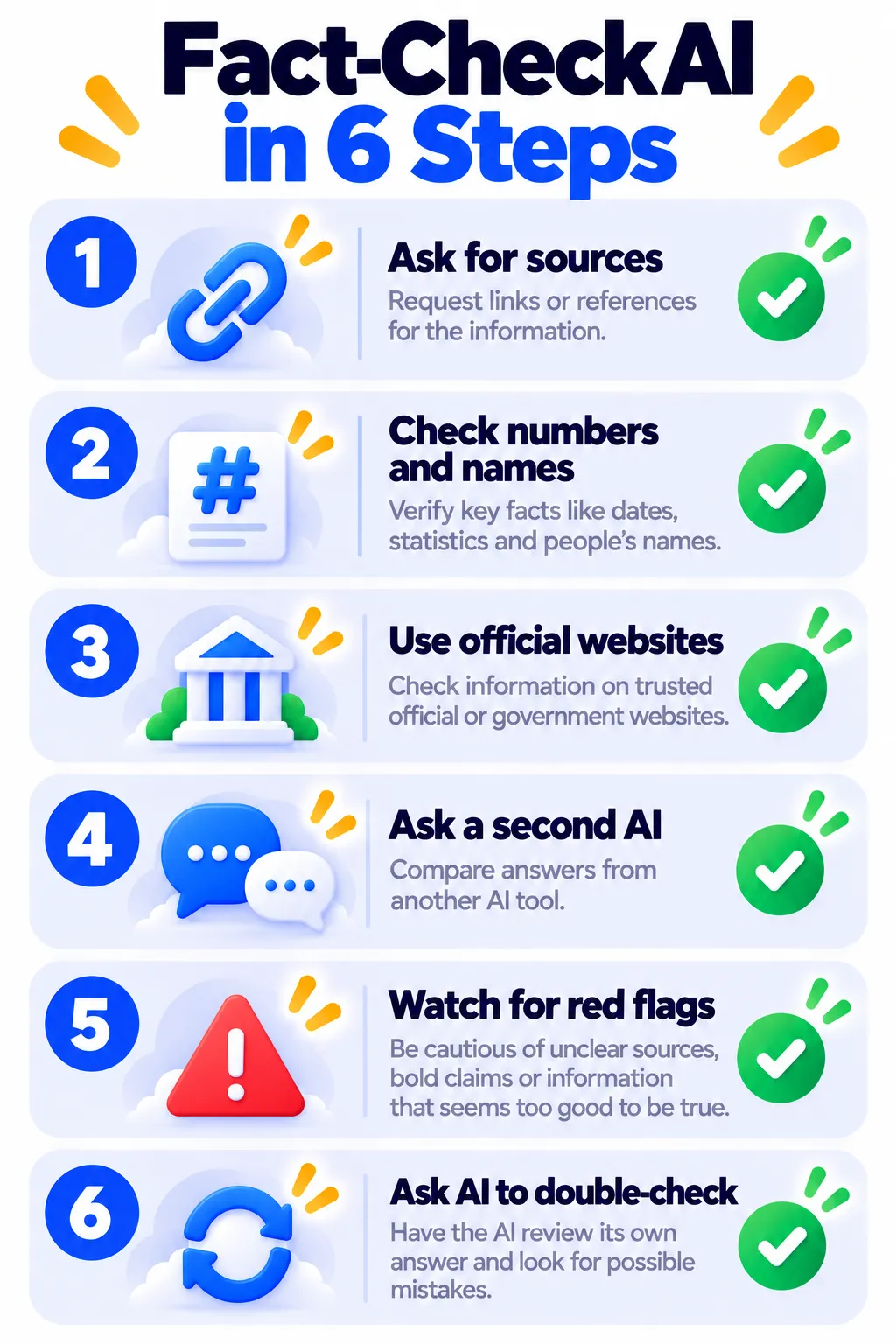
4. Ask a Second AI
Ask the same question in another assistant, like Gemini or Claude. If answers disagree, that’s your cue to dig deeper. See how they compare in ChatGPT vs Gemini vs Claude.
5. Watch for Red Flags
- Very specific numbers with no source.
- Quotes from famous people you can’t find anywhere else.
- Links that don’t work or lead to unrelated pages.
- Answers about recent events, prices or rules.
- Overly confident language on topics experts debate.
6. Ask AI to Check Itself
Try: “Review your last answer. Which parts might be wrong or outdated?” It won’t catch everything, but it often flags weak spots.
When Fact-Checking Matters Most
- Health, medicine and dosages.
- Money, taxes and contracts.
- Legal rights and government rules.
- Anything you’ll publish, submit or share publicly.
Frequently Asked Questions
How often is AI wrong?
It varies by tool and topic. Simple, well-known facts are usually right; niche, recent or numeric details are riskier.
Are AI tools with web search more accurate?
They’re often more up to date and show sources, but you should still open the sources to confirm.
Can AI detect its own mistakes?
Sometimes. Asking it to review its answer helps, but human checking is still essential.
The Bottom Line
Use AI to get started quickly, then verify anything important against real sources. A two-minute check can save you from a costly mistake. For more good habits, read 10 AI mistakes beginners make.
Related Guides
- 10 AI Mistakes Beginners Make (and How to Avoid Them)
- What Is Perplexity AI? How It Works, Pricing and How to Use It (2026)
- How to Tell If an Image Is AI-Generated: 6 Simple Checks (2026)
- How to Use AI to Understand Confusing Documents (Bills, Leases and Contracts)
Explore more in our AI Tools Directory hub.
Disclaimer: This article is for general information only and is based on details available at the time of writing. Prices, plans, features, release dates, policies and availability can change at any time and may vary by country. Please verify the latest information on the official website of the company or product mentioned before making any decision or purchase. This is not medical, financial, legal or security advice; consult a qualified professional for your situation. Next DigiTech is an independent website and is not affiliated with or endorsed by the companies mentioned; all trademarks belong to their respective owners. We are not responsible for any loss or decisions made based on this content.