

Scammers often target parents and grandparents with urgent phone calls and text messages. They pretend to be a bank, a delivery company, the government or even a grandchild in trouble. A short, calm family conversation today can prevent a costly mistake tomorrow. Use this simple checklist to talk it through together.
Quick answer: Teach your parents five warning signs (urgency, secrecy, unusual payment, requests for codes and unexpected links) and three rules: hang up and call back on an official number, never share a one-time code, and always pause to ask family before sending money.
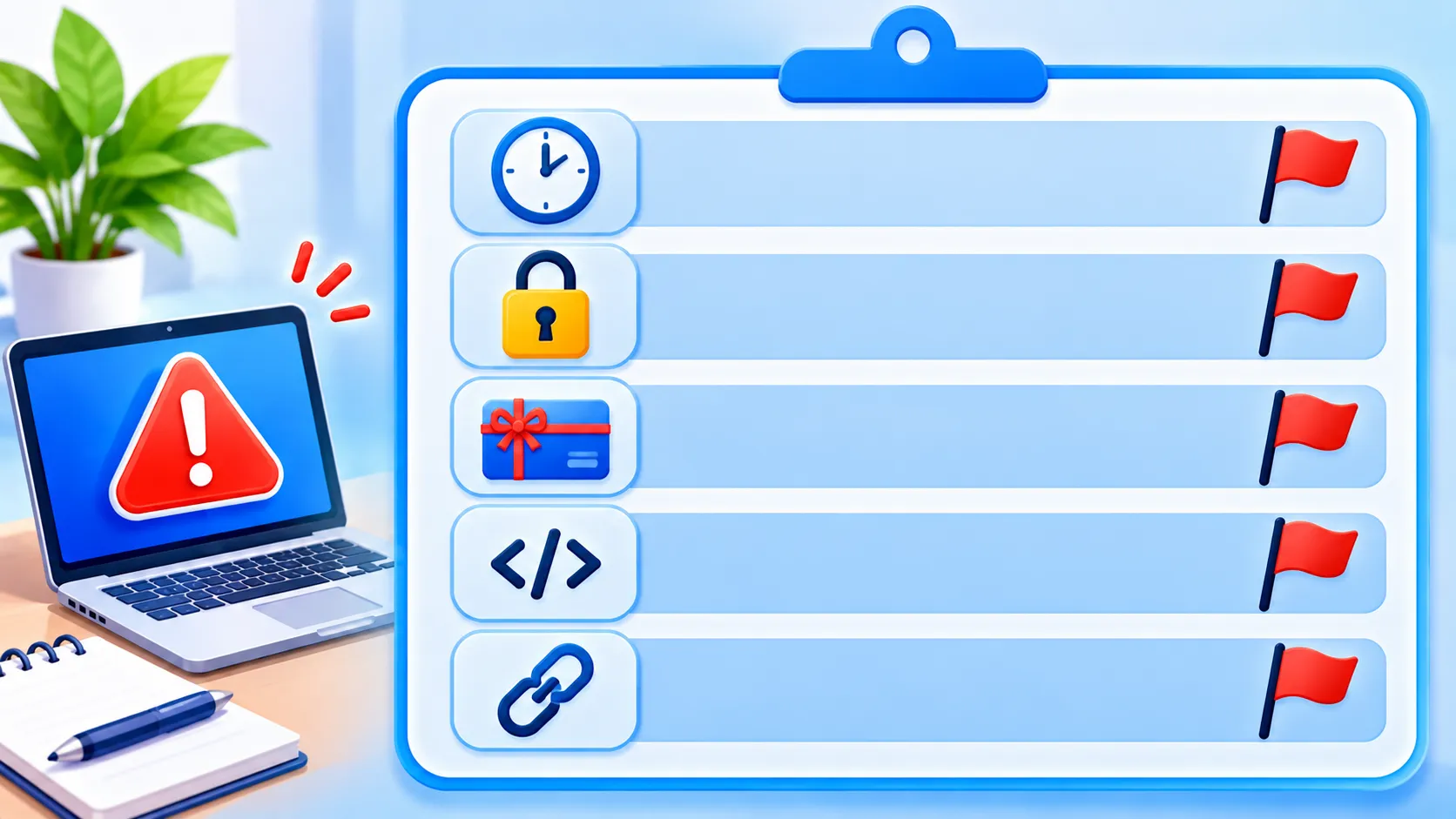
The five warning signs
- Urgency: “Act now or your account will be closed.” Real companies rarely rush you.
- Secrecy: “Do not tell your family about this.” That is a classic scam line.
- Unusual payment: gift cards, crypto, wire transfers or payment apps to strangers.
- Requests for codes: one-time passcodes, passwords or PINs.
- Unknown links: a text with a link you did not expect, even if it looks official.
Three rules to teach
- Hang up and call back using a number from the official website or the back of your bank card. Never use the number the caller gives you.
- Never share a one-time code with anyone who contacts you first. Your bank will never ask for it.
- Pause and ask family before sending money, buying gift cards or clicking a link.
Common scams to talk about
| Scam | What they say | What to do |
|---|---|---|
| Grandparent scam | “Grandma, I am in trouble, please send money” | Hang up and call the grandchild directly |
| Fake bank call | “Your account is locked, read me the code” | Never share codes, call the bank yourself |
| Delivery text | “Your parcel is held, pay a small fee” | Do not click, check the courier app or site |
| Tech support | “Your computer has a virus, let us connect” | Hang up, never allow remote access |
| Government or tax | “Pay a fine today or face arrest” | Hang up, agencies send letters first |
Set a family code word
Agree on a private word that only your family knows. If someone calls claiming to be a relative in trouble, ask for the code word. This is one of the best defences against cloned voices, which we explain in AI voice cloning scams.
Reduce the noise on their phone
Fewer scam calls means fewer chances to fall for one. Help your parents turn on spam filtering and silence unknown callers. See how to stop spam calls and how to block spam texts for step-by-step settings on iPhone and Android.
Practise with a role play
It sounds silly, but it works. Pretend to be a scammer and call your parent. Use urgency and a made-up story. Let them practise saying “I will call you back” and hanging up. Practising once makes it much easier to do under pressure.
If they already clicked or paid
- Call the bank or card issuer right away using the number on the card.
- Change passwords for any account they logged in to, and turn on two-factor authentication.
- Report it. In the US, report fraud at ReportFraud.ftc.gov. Elsewhere, contact your national consumer-protection or cybercrime agency.
- Get support. The AARP Fraud Watch Helpline offers free help for victims and families.
- Do not feel ashamed. Scammers are professionals. Talking about it openly helps the whole family.
Note: Scam tactics change quickly. Use this as a starting point, not a complete list.
The bottom line
You do not need a long lecture. Sit down for ten minutes, go through the five warning signs and three rules, set a family code word and turn on spam filtering. These small steps make your parents a much harder target.
Frequently asked questions
What is the most common scam targeting older adults?
Impersonation scams are very common, where someone pretends to be a bank, a government agency, tech support or a family member in trouble.
Will a real bank ask for a one-time code on the phone?
No. A real bank will not call you and ask you to read out a one-time code. Anyone who does is almost certainly a scammer.
What is a family code word?
It is a secret word only your family knows. If a caller claims to be a relative, asking for the word quickly shows whether it is really them.
Can scam calls be blocked completely?
Not completely, but spam filters and silencing unknown callers on iPhone and Android block most of them.